In business, you know that being focused on your vision is paramount to your success. Obstacles and distractions constantly threaten your attention. One of the biggest impediments to success can be technology — researching it, acquiring it, maintaining it and upgrading it.
That’s where cloud computing comes in. Turning to a cloud service provider to design, implement and manage your technology allows you to concentrate on your core vision and pursue your business objectives.
Simply put: Would you rather your employees focus on what you hired them to do? Or do you want them spending valuable time learning how to upgrade software, run anti-virus scans and deal with hard-drive crashes?
With cloud computing, users are connecting to applications that run on a set of shared servers, rather than running on a single dedicated server.
1. Reduce Initial Costs
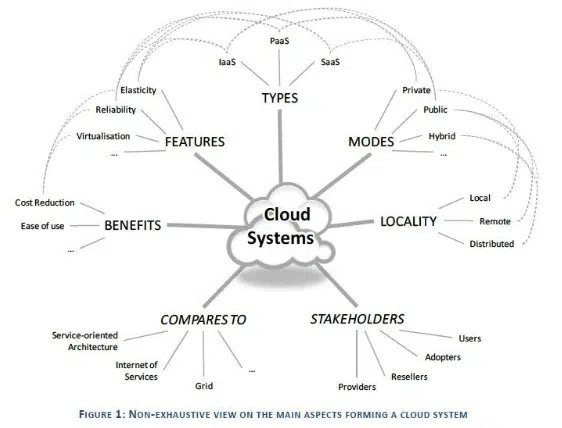 Using a cloud computing service means you can eliminate the up-front capital investment needed to buy hardware and software and run the on-site data centers and servers to maintain that physical infrastructure.
Instead of offices filled with desktop units, your staff can use laptops, tablets and cellphones for their work. You would have a subscription-based, pay-as-you-go model for your technology needs. You pay for what you need, when you need it.
2. Work Faster and Smarter
Using the cloud accelerates the speed of deployments and reduces the risk of failed deployments. In a cloud-based environment, new technology is only a click away. So you minimize the lead-time needed to implement new resources, increasing your business’ agility in a competitive world.
3. Scale Up
You can take advantage of economies of scale when you use a cloud service provider, allowing you to obtain greater resources at a reduced cost. At the same time, your business can reach globally in its scale via that agile technology.
4. Increase Productivity
By allowing your staff to focus fully on strategic priorities and not worry about technology issues, you’ll see an increase in productivity. This includes your IT staff, who can focus on issues other than maintaining hardware. Using cloud-based services also allows for greater collaboration, among your employees or with outside colleagues, such as contractors or freelancers.
5. Reliable Performance
You’ll receive continuous updates and upgrades at no additional cost, because your cloud-provider will need to ensure its services are up-to-date. While you no longer have to worry about constantly maintaining your IT hardware, you’ll still have access to the latest technology.
What About the Risks?
 British science writer Chris Woodford explains it this way: “Think of cloud computing as renting a fully serviced flat instead of buying a home of your own. Clearly there are advantages in terms of convenience, but there are huge restrictions on how you can live and what you can alter.”
In short, by using cloud services, you become dependent on the companies that control your access to the internet.
“Putting all your faith in the cloud means you’re also putting all your faith in continued, unfettered access,” wrote Eric Griffith in PC Mag. “You might get this level of access, but it’ll cost you. And it will continue to cost more and more as companies find ways to make you pay by doing things like metering your service: the more bandwidth you use, the more it costs.”
Know Your Cloud Service Provider
 In addition to those broad questions about maintaining Internet access, there are day-to-day risks with cloud computing. Research shows these concerns break down generally into these areas:
- Security risks of unauthorized access or leak of either customer or proprietary information, or even security defects in the technology itself.
- Risks at the cloud service provider, such as its disaster recovery readiness or business viability.
- Risk of outages and other technical issues, which can happen to even the best cloud service provider. In addition, there is the potential for network and connectivity problems with your internet provider.
This data underscores why it’s important to know your cloud service provider. Because of its extensive experience with cloud computing and its working relationships with business clients, V2 Systems can address these concerns and deliver successful results with cloud computing solutions tailored to your business.
Since 1995, Manassas Park, VA-based V2 Systems has employed local systems administrators, network engineers, security consultants, help desk technicians and partnering companies to meet a wide range of clients’ IT needs, from research, to implementation, to maintenance. Concentrate on your VISION…We’ll handle the TECHNOLOGY!