In the swiftly evolving digital world, cybersecurity threats loom larger than ever, posing significant risks to businesses and organizations. Among these threats, phishing attacks stand out as particularly insidious, leveraging deception to breach the defenses of even the most secure organizations. For businesses in the DMV, where the intersection of technology, government, and commerce creates a hotbed for cyber activity, understanding and guarding against phishing is paramount.
What are Phishing Attacks?
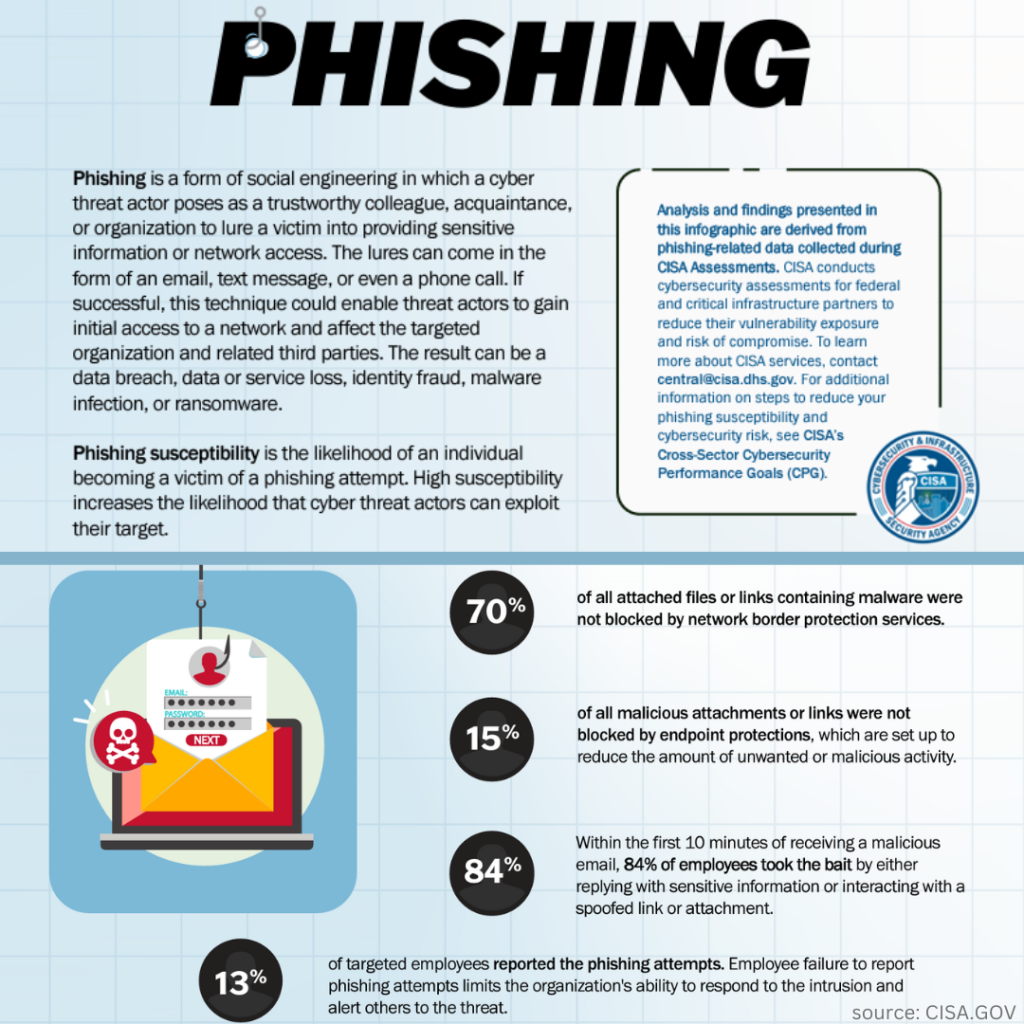
Phishing is a cyber attack that uses disguised email as a weapon. The goal is to trick the email recipient into believing that the message is something they want or need — a request from their bank, for instance, or a note from someone in their company — and to click a link or download an attachment.
What sets phishing apart are the various forms it can take. From email phishing, the most common variety, to more targeted forms like spear phishing and whaling, which aim at specific individuals or companies, the tactics are ever-evolving. Recently, we have seen the rise of smishing and vishing, phishing attacks conducted through text messages and phone calls.
How Phishing Attacks Work
A typical phishing attack begins with a fraudulent communication, most often an email, designed to appear as if it comes from a reputable source. This could be anything from a fake security alert from a well-known company to a bogus business proposition. The message will usually contain a sense of urgency, prompting the recipient to act quickly by clicking on a link or opening an attachment, leading to malicious websites or the installation of malware. Beyond these general tactics, phishing takes on various forms, each with its own deceptive techniques:
- Spear Phishing: Unlike broad-based phishing attacks, spear phishing targets specific individuals or organizations. Attackers personalize emails using the victim’s name, position, company, or other personal information to increase the email’s credibility.
- Whaling: A subset of spear phishing, whaling aims at high-profile targets such as C-level executives, politicians, and celebrities. The content is often crafted to mimic critical business emails, legal notices, or executive issues.
- Smishing (SMS Phishing): This technique uses text messages to trick recipients into revealing personal information or downloading malware. These messages might prompt the user to confirm a password or click on a link.
- Vishing (Voice Phishing): Vishing involves phone calls to steal personal information. The caller might pose as a bank representative or a customer service agent from a well-known company, seeking to verify account details or confidential information.
- Pharming: Unlike other phishing techniques that rely on duping the user into clicking a malicious link, pharming redirects users to a fraudulent website even if they type the correct address into their web browser. This is achieved by hijacking the website’s domain name system (DNS) or exploiting vulnerabilities in the DNS server.
- Clone Phishing: In clone phishing, attackers create a nearly identical replica of a previously delivered but legitimate email, complete with the original attachments or links. The malicious version is sent from an email address spoofed to appear as if it’s coming from the original sender, but the attachments or links are replaced with malware or a phishing site.
- Angler Phishing: This newer form of phishing exploits social media platforms. Attackers impersonate customer service accounts, reaching out to individuals who have posted complaints or queries on social media. They then attempt to obtain personal information or account credentials.
Understanding these various phishing techniques underscores the importance of maintaining a high level of vigilance across all communication channels, not just email. It’s crucial for individuals and organizations to recognize the signs of these attacks and to implement comprehensive security measures to protect sensitive information.
Some Examples of High-Profile Phishing Attacks Over the Years
The Impact of Phishing on Businesses
Phishing attacks can have devastating impacts on businesses, both financially and reputationally. Financially, the direct costs can include significant monetary losses from fraudulent transactions, the cost of investigating the breach, and potential fines for data protection violations. Reputationally, the loss of customer trust and damage to brand image can have long-lasting effects that are hard to quantify but can be even more detrimental in the long term. Moreover, phishing can lead to the theft of sensitive data, including intellectual property, customer information, and employee records, which can have far-reaching implications for business operations and competitiveness.
To protect against these impacts, businesses must adopt a multifaceted cybersecurity strategy:
- Comprehensive Employee Training: Beyond recognizing the signs of phishing emails, employees should be educated on the latest phishing tactics and how to handle suspicious communications. Regular, updated training sessions can help keep security top of mind.
- Advanced Email Filtering Solutions: Leveraging cutting-edge email security solutions that include spam filters, phishing detection algorithms, and quarantine areas for suspicious emails can significantly decrease the likelihood of phishing emails reaching employees.
- Regular System Updates and Patch Management: Keeping all systems updated with the latest security patches is crucial in defending against exploits that phishing emails may leverage to deliver malware.
- Protocols for Reporting Phishing Attempts: Establish a clear, simple process for employees to report suspected phishing attempts. This not only helps in taking swift action against potential threats but also aids in gathering data to improve security measures.
- Multi-factor Authentication (MFA): MFA adds an additional layer of security, ensuring that even if login credentials are compromised, unauthorized access is still blocked. Implementing MFA across all systems, particularly those accessing sensitive information, is key.
- Regular Security Assessments: Conducting regular security assessments and penetration testing can help identify vulnerabilities before they can be exploited by phishing attacks.
- Cybersecurity Insurance: Investing in cybersecurity insurance can provide an additional safety net to cover the financial losses associated with data breaches resulting from phishing attacks.
- Legal and Compliance Measures: Ensure that your business is compliant with all relevant data protection laws and regulations. This not only reduces the risk of fines and penalties but also guides the implementation of best practices in data security.
By understanding the multifaceted impacts of phishing and implementing a robust, layered defense strategy, businesses can significantly mitigate the risk of phishing attacks and their potential damages. It’s a continuous process that involves staying informed about the latest cyber threats and adapting protective measures accordingly.

Responding to a Phishing Attack
Should you suspect a phishing attempt, it’s crucial to act swiftly. Do not interact with the email or message. Instead, report it to your IT department or a cybersecurity professional. If a breach occurs, follow your incident response plan, notify affected parties as appropriate, and work to secure your systems against future attacks.
In today’s digital age, the threat of phishing cannot be underestimated. Businesses must remain vigilant and proactive in their cybersecurity efforts. By understanding phishing attacks and implementing strong protective measures, you can safeguard your organization’s data, reputation, and future.
At V2 Systems, we specialize in helping businesses navigate the complex landscape of cybersecurity. If you’re concerned about phishing or other cyber threats, contact us today for a comprehensive assessment and tailored solutions to protect your business.
Since 1995, V2 Systems has employed local systems administrators, network engineers, security consultants, help desk technicians and partnering companies to meet a wide range of clients’ IT needs, from research, to implementation, to maintenance. Concentrate on your VISION…We’ll handle the TECHNOLOGY!