Cybersecurity threats are evolving to a point many of us thought we wouldn’t see within our lifetime. Have you heard of Moore’s Law? In simple terms, it states that the processing power of computers will double every two years. This law came out in the 1970s and since then, you can see how far technology has come. However, malicious users can also make use of this technology, which means that threats can grow exponentially in a very literal sense. Here’s a brief overview of what we are already starting to see the early stages of, and how they’re expected to get worse over time.
Cloud Vulnerability
In recent years, the use of cloud-based technology is commonplace and nearly everyone has switched to the cloud by now. It’s being used to house everything from sensitive information, such as employee data and business operations, to online hubs for remote workers to log into from home. According to Oracle, cloud vulnerability is and will continue to be one of the biggest cybersecurity challenges faced by organizations to date. These organizations make tempting targets for malicious hackers.
Failing to invest in robust cloud security leaves your organization ripe for data breaches, account hijacking, malicious insider threats, DDoS attacks and more.
AI-Powered Attacks
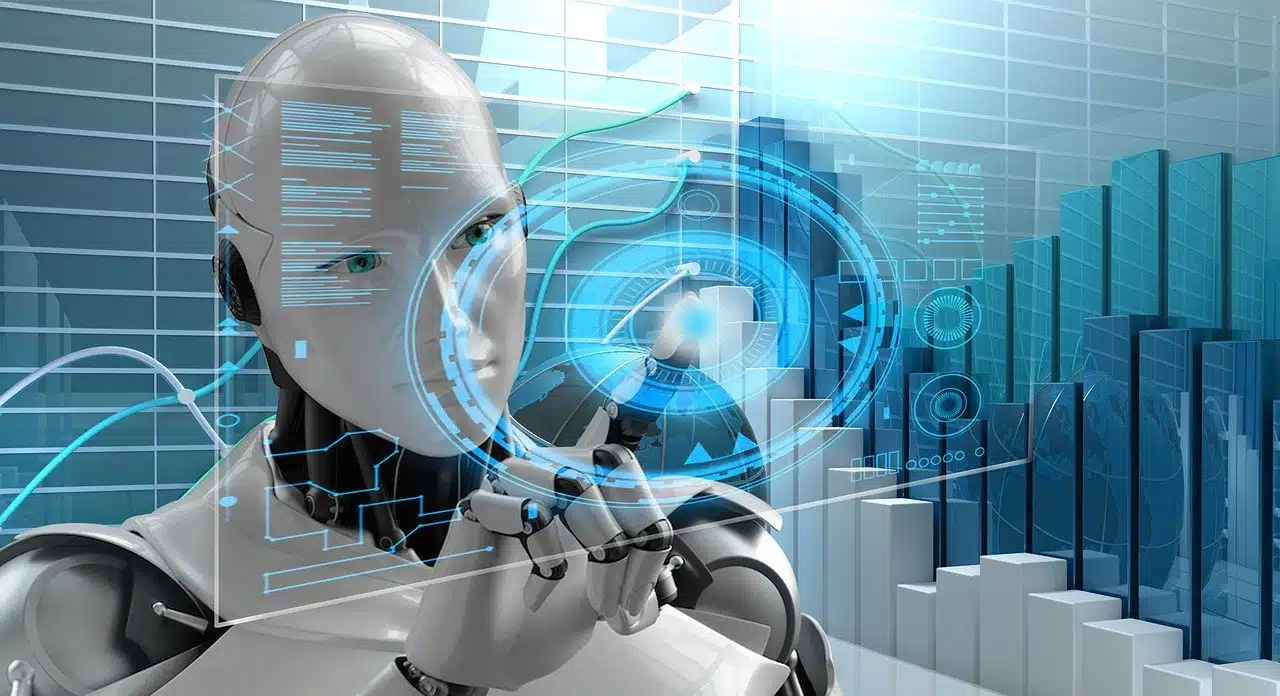 Science fiction has shown us the wonders, and horrors, of machines that can learn. Since appearing in books and on the big screen, friendly machines that can teach themselves and help us in our day-to-day tasks has been a technological goal. It seems that day is approaching sooner than we think. Machine learning has started to emerge and from the looks of it, its presence has completely and permanently altered the battlefield. Artificial intelligence (AI) is finding its way into the business mainstream, and with it comes entirely new attack vectors. Hackers can now utilize AI to launch sophisticated cyberattacks in the form of complex and adaptive malicious software.
Social Engineering Attacks
When we talk about social engineering attacks, what we’re really describing is phishing. Phishing methods are becoming more complex, increasingly believable and harder to spot by the average person. Businesses are stepping up their game with increased email security, but so too are cybercriminals with more advanced phishing kits. Not only do these kits contain materials that aid in spoofing legitimate companies such as Google and Microsoft in increasingly convincing ways, but the “payloads” they deliver are also becoming exponentially effective. A single click is all it takes for an entire city or county to be locked down with ransomware.
As these threats to cybersecurity continue to grow and become more complex, it’s all but impossible for businesses to focus on them. Doing so would require 24/7 planning, monitoring, prevention and fire response. In order for your organization to remain afloat, you can’t afford to shoulder that responsibility on your own. You can’t afford to ignore it, either. You need a partner you can trust who will take care of these threats as they continue to evolve.
Technology has helped us achieve wonderful things thus far and it is still evolving to allow us to reach further each year. Moore’s Law, while showing just how far we have come and how far we can yet still go, should be helping your business to grow, not shutting it down. Let us help make it work for you instead. Contact us today!
Since 1995, Manassas Park, VA-based V2 Systems has employed local systems administrators, network engineers, security consultants, help desk technicians and partnering companies to meet a wide range of clients’ IT needs, from research, to implementation, to maintenance. Concentrate on your VISION…We’ll handle the TECHNOLOGY!