Businesses today face a wide range of cyber threats and one of the more disruptive and increasingly common tactics is a registration bomb attack. It may not be as well-known as ransomware or phishing, but this attack can cause serious operational headaches while hiding more sinister motives beneath the surface.
We recently helped one of our clients who fell victim to a registration bomb attack, and it served as a reminder of how critical it is to be proactive against evolving cyber threats. In this blog, we’ll break down what a registration bomb attack is, how you can protect yourself, and what steps to take if your business becomes a target.
What is a Registration Bomb Attack?
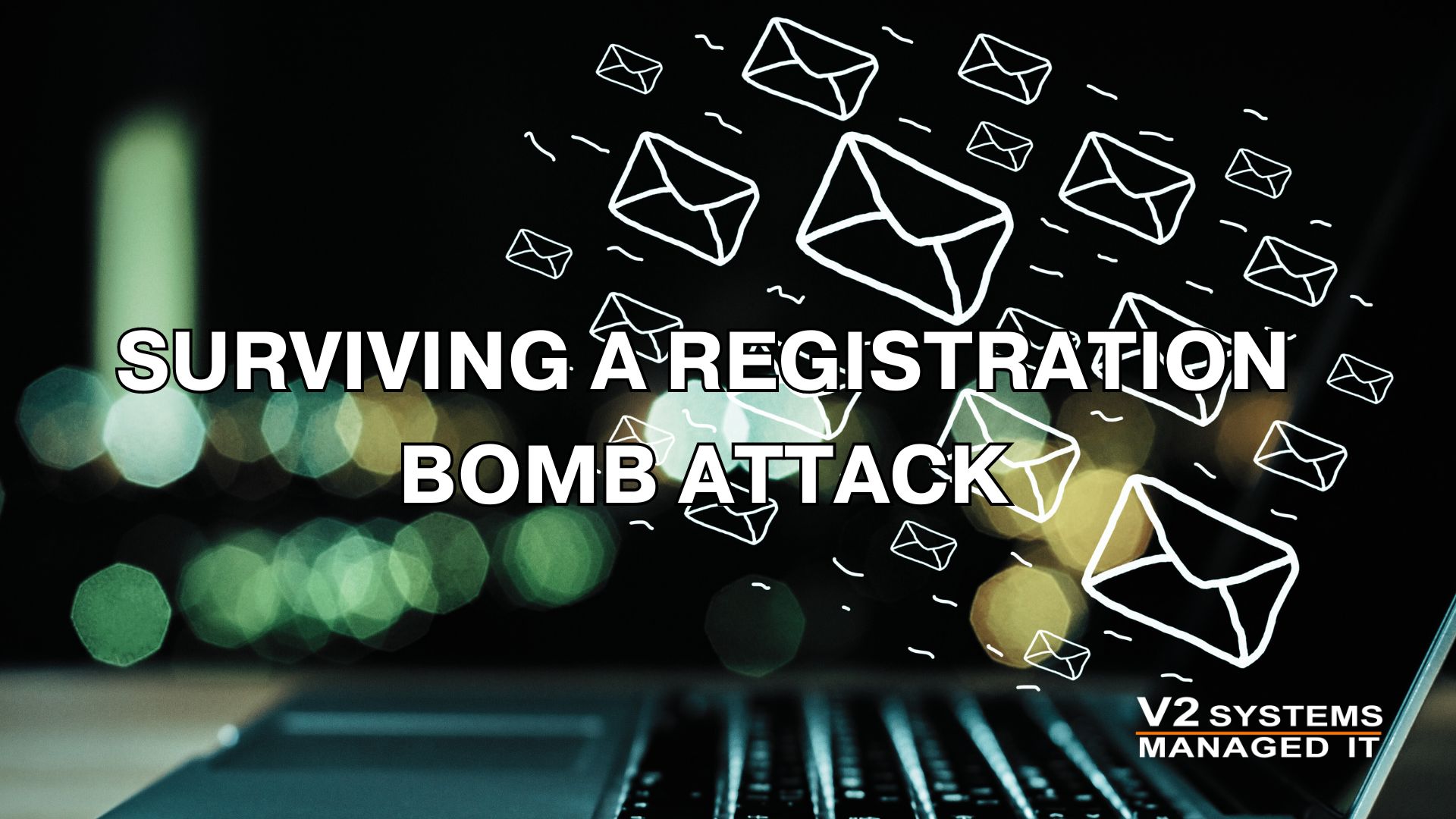
A registration bomb attack occurs when cybercriminals flood a victim’s inbox with hundreds or even thousands of unwanted email subscriptions. These subscriptions are often sent from legitimate websites after criminals use automated bots to submit the victim’s email address across various online forms. The goal? To overwhelm the inbox with junk email, which in turn:
- Makes it difficult to find legitimate, critical communications.
- Obscures evidence of more serious threats, such as fraudulent account activity or unauthorized transactions.
- Potentially diverts attention away from attempts to compromise sensitive data.
These attacks are especially dangerous because while you’re busy sifting through a cluttered inbox, cybercriminals might be carrying out other malicious activities unnoticed. 
How to Protect Yourself from a Registration Bomb Attack
Preventing a registration bomb attack requires vigilance and layered security measures. Here are some practical steps to reduce your risk:
- Use email filtering and anti-spam tools – Many email services offer built-in spam filtering, but consider adding a more advanced solution that can help detect unusual spikes in email volume.
- Enable two-factor authentication (2FA) – Make sure that all sensitive accounts are protected with 2FA, which will provide an extra layer of security in case login credentials are compromised.
- Monitor your accounts for unusual activity – Be on the lookout for suspicious login attempts or unrecognized transactions, especially if you receive a sudden influx of subscription emails. A registration bomb attack is often a diversion tactic.
- Regularly review account settings – Ensure that any changes to email forwarding, filters, and other settings are legitimate. Hackers may attempt to reroute emails during these attacks.
- Educate your team – Make sure your staff understands what registration bombing is and knows how to spot the signs early. A well-informed team is your first line of defense.

What to Do If You Fall Victim to a Registration Bomb Attack
If you’re already facing a registration bomb attack, don’t panic—there are steps you can take to regain control:
- Do not unsubscribe from emails immediately – Though it may be tempting to start unsubscribing from unwanted emails, doing so can often confirm to attackers that the address is active and lead to even more spam.
- Secure your accounts – Immediately check your accounts for signs of unauthorized access. Look for password changes, new account registrations, and other suspicious activities. Change your passwords and enable 2FA if it isn’t already.
- Contact your IT team or Managed Service Provider (MSP) – If you’re working with an MSP like V2 Systems, reach out for assistance in identifying the scope of the attack and mitigating potential damage. We can help you filter out the flood of junk emails, ensure your systems are secure, and monitor for further threats.
- Set up email filters – Create rules in your email system to temporarily filter the subscription emails into a designated folder so they don’t overwhelm your inbox. This can give you the space to focus on identifying any hidden threats.
How V2 Systems Can Help You Stay Protected
Cyber threats are constantly evolving, and registration bomb attacks are just one of the many tactics criminals use to disrupt businesses. At V2 Systems, we work closely with our clients to monitor for unusual activity, secure critical systems, and implement proactive defenses that can mitigate the impact of these and other attacks.
If you’re concerned about your organization’s vulnerability to registration bombing or other cyber threats, contact us today. Our team of experts is here to help you navigate the complex cybersecurity landscape and protect your business from emerging risks. We also offer complimentary consultations to assess your current defenses and identify areas for improvement.
Since 1995, V2 Systems has employed local systems administrators, network engineers, security consultants, help desk technicians and partnering companies to meet a wide range of clients’ IT needs, from research, to implementation, to maintenance. Concentrate on your VISION…We’ll handle the TECHNOLOGY!