Shadow IT and SaaS sprawl are growing threats for small and midsized businesses. When employees use unauthorized apps or cloud services, they can unintentionally expose sensitive data and bypass security controls. Learn how to identify and manage these hidden risks before they compromise your business.
The True Cost of Downtime: Why SMBs Can’t Afford to Ignore Disaster Recovery Planning in 2025
For small and midsized businesses, a day, or even an hour, of downtime can be devastating. Whether it’s caused by a ransomware attack, server failure, or natural disaster, the inability to access your systems can bring operations to a halt and cost thousands in lost productivity, missed revenue, and reputational damage. Despite the risks, many SMBs still don’t have a disaster recovery (DR) plan in place. In 2025, with cyberattacks growing more frequent and IT systems more complex, that’s a gamble most businesses can’t afford to take.
FedRAMP, GCC High, and Beyond: Choosing the Right Cloud Security Path for Government Contractors in 2025
As the final CMMC rule takes shape and cybersecurity threats grow more advanced, government contractors are under increasing pressure to secure their data and meet federal compliance standards. While many are familiar with Microsoft’s GCC and GCC High environments, these aren’t the only options. Platforms that meet FedRAMP, ITAR, and other federal requirements are also gaining traction. But with so many acronyms and overlapping standards, how do you choose the right path?
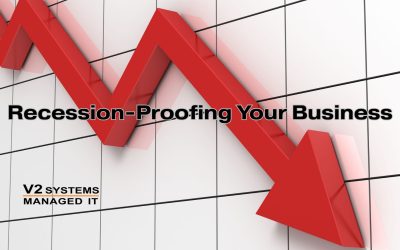
Recession-Proofing Your Business: Why Cutting Cybersecurity Isn’t the Answer
As economic uncertainty, tariffs, and talk of recession weigh heavily on small businesses, cybersecurity may seem like a tempting area to cut. But in reality, lean times are when cybercriminals strike hardest—and reducing protection could cost far more in the long run. This blog explores how both private companies and government contractors can stay secure without breaking the bank.
What Is Cybersecurity, Ken? A Jeopardy-Inspired Look at Digital Defense – By Erik Briceño, President & CEO, V2 Systems
When Jeopardy!—America’s favorite trivia game show—featured a Cybersecurity category last month, I knew we had to talk about it. It’s not every day that cybersecurity gets the prime-time spotlight, and for those of us in the industry, it’s both fun and heartening to see our work woven into pop culture. But while the answers were formatted in the show’s classic Q&A style, the real-life implications behind them are anything but trivial. In this blog we will explore the clues and, more importantly, why they matter.
Microsoft 365 Compliance Manager: A Step-by-Step Guide for Government Contractors
Compliance can feel overwhelming for government contractors—especially with evolving frameworks like CMMC, DFARS, and NIST 800-171. Microsoft 365 Compliance Manager helps you help you manage it all. In this blog, we explore how government contractors can use Microsoft 365 Compliance Manager to streamline their compliance journey, avoid costly missteps, and improve their overall cybersecurity posture.
Microsoft GCC vs. GCC High: Security, Compliance, and Migration Considerations
For government contractors, defense organizations, and businesses handling CUI, choosing the right Microsoft cloud environment is critical for both security and compliance. This guide breaks down the security, compliance, and migration considerations when adopting GCC or GCC High, helping businesses avoid common pitfalls.
The Top 5 Cybersecurity Tools for Telecommuters
Remote work has become a norm in today’s business landscape, transforming the way organizations operate. While this shift offers flexibility and cost savings, it also introduces significant cybersecurity risks. For businesses and nonprofits, ensuring the security of their remote workforce is paramount. Here are the top five cybersecurity tools that telecommuters need to stay safe and secure.
Telecommuting Safely: How to Secure Your Home Office
The shift towards telecommuting has been significant and has reshaped the way we work. While working from home offers numerous benefits, it also introduces a host of cybersecurity challenges. Ensuring the security of your home office is paramount to protect sensitive data and maintain business continuity.
Securing the Cloud: The 5 Steps for Safeguarding Your Data
In today’s digital age, cloud computing has become a cornerstone of business operations, offering scalability, flexibility, and cost-efficiency previously unattainable with traditional IT infrastructure. As companies of all sizes migrate to the cloud, the advantages of being able to access data anytime, anywhere, have transformed how businesses operate. However, this shift also brings new challenges and vulnerabilities in data security. Explore the five key steps that MSPs employ to safeguard your data in the cloud that many times internal solutions simply cannot match.
How can we help you?
Call us at 703.962.4508 or fill out the quick form below and we’ll hit you back right away.